November 2026 – February 2027
Capogrossi
Images of a story 1952/1972
11 November 2026 – 26 February 2027
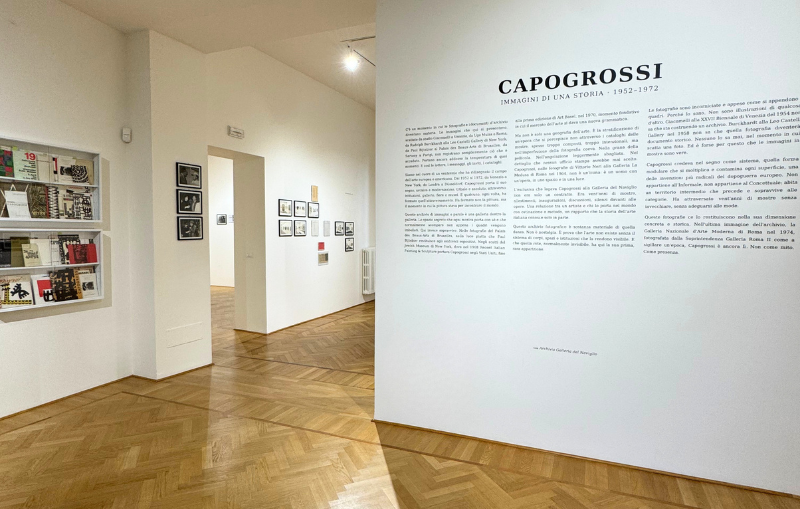
Studio Gariboldi, in collaboration with the archive of the Galleria del Naviglio, is pleased to announce the exhibition Capogrossi. Images of a story 1952/1972.
From 1952 to 1972, from Venice to New York, from London to Düsseldorf, Capogrossi brought his sign, at once archaic and ultramodern, tribal and absolute, through institutions, galleries, fairs and museums. And each time, someone stopped that crossing: the moment when painting was about to meet the world. This is what the exhibition Capogrossi. Images of a History 1952/1972, presented by Studio Gariboldi to the public and to collectors, is about.
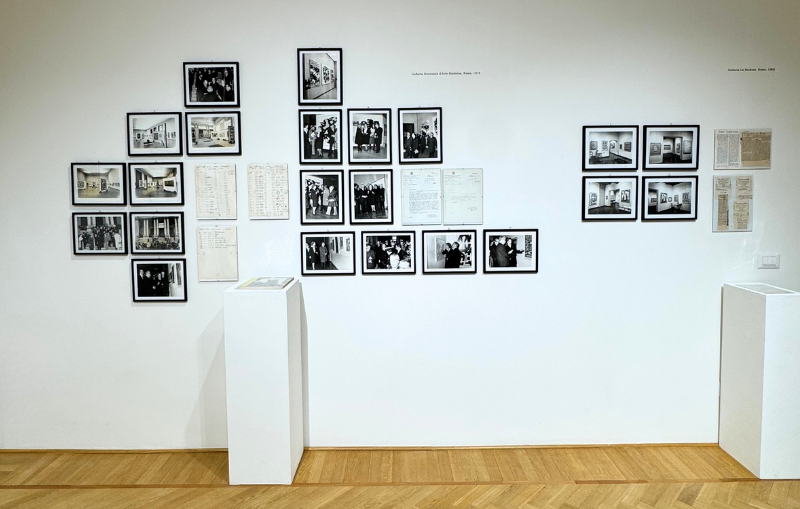
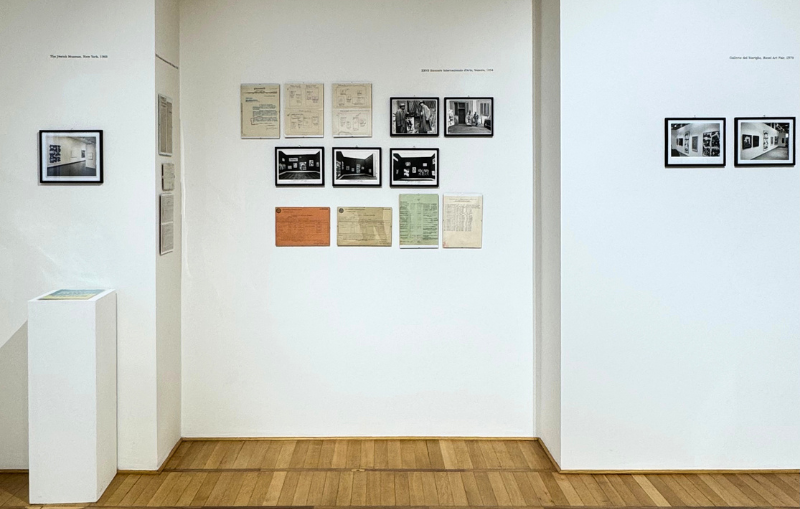
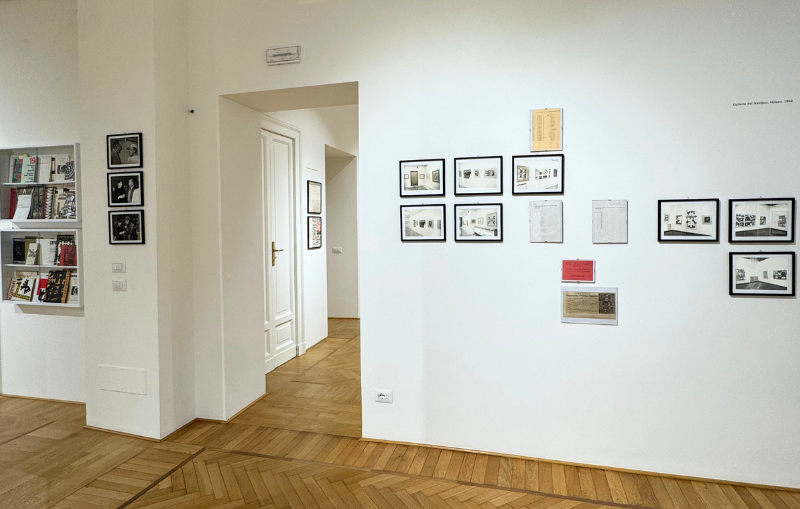
There is a moment when photographs and archival documents become matter. This is what happens in the images Studio Gariboldi presents in the exhibition. They were taken by Studio Giacomelli in Venice, by Ugo Mulas in Rome, by Rudolph Burckhardt at the Leo Castelli Gallery in New York, by Paul Bijtebier at the Palais des Beaux-Arts in Brussels, and by Sartony in Paris. They do not simply record what happened during those events; they still carry the temperature and the emotions connected to them. The same is true of the letters, messages, invitations and catalogues that are part of this exhibition.
This archive of images and words, coming from the archive of the Galleria del Naviglio, is a gallery within the gallery. It includes the photographs of the Palais des Beaux-Arts in Brussels and the shots from the Jewish Museum in New York, where in 1968 Recent Italian Painting & Sculpture brought Capogrossi back to the United States, up to the first edition of Art Basel in 1970, a founding moment in which the art market gave itself a new grammar.
The exclusive agreement that bound Capogrossi to the Galleria del Naviglio was not merely a contract. It was twenty years of exhibitions, installations, openings, discussions, and silences before the works. It was a relationship between an artist and the one who brings him into the world with obstinacy and method, a bond that Italian art history knows only in part.
Capogrossi believed in the sign as a system, that modular form which multiplies and contaminates every surface, one of the most radical inventions of postwar Europe. It belongs neither to Art Informel nor to Conceptual art: it inhabits an intermediate territory that precedes and outlives categories.
These photographs and documents give him back to us in his concrete, historical dimension. Capogrossi is still there. Not as a myth. As a presence.