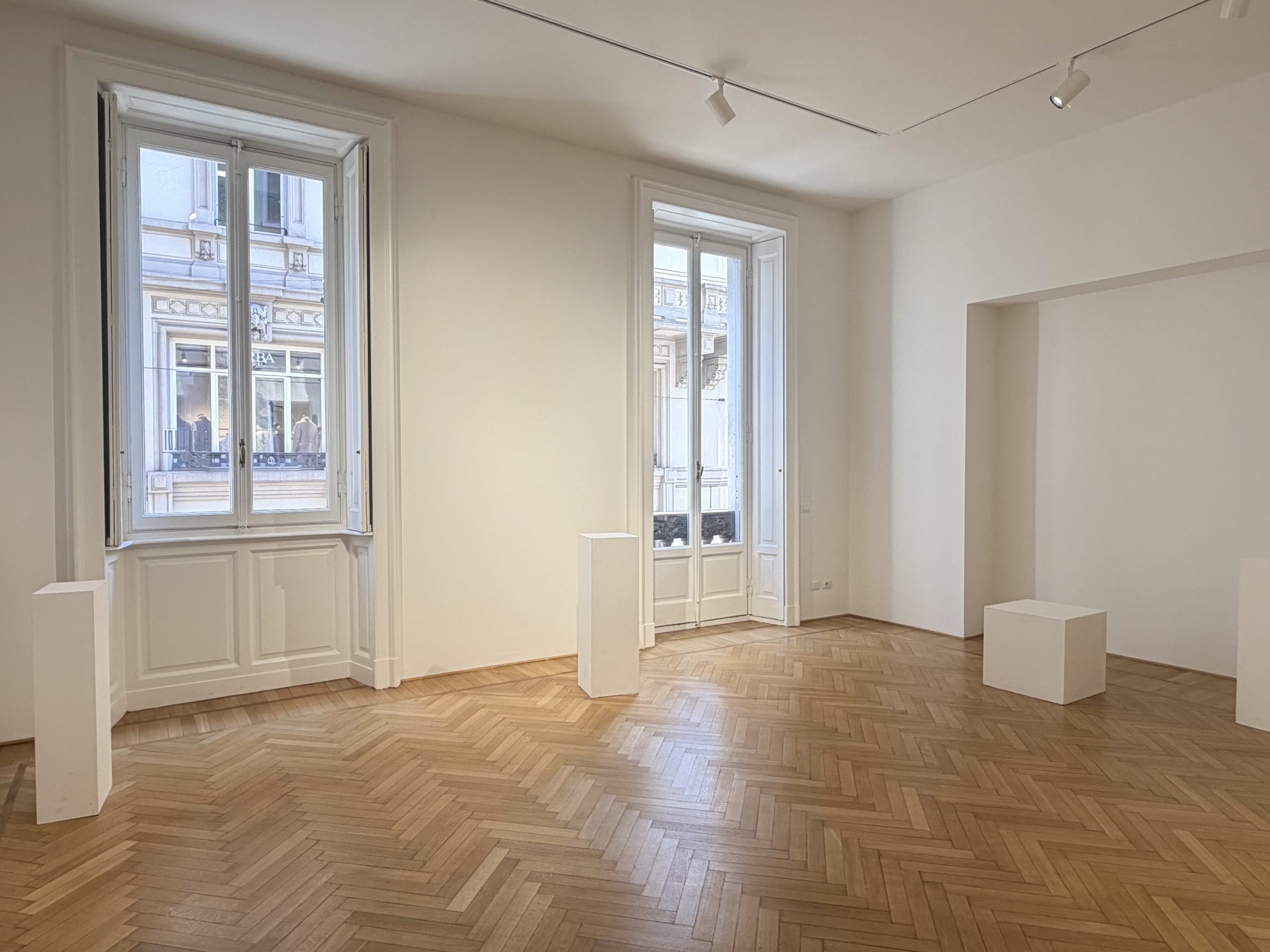
Coming Soon
CALENDARIO INCONTRI AUTUNNO 2026
Per info e iscrizioni: [email protected]
Whatsapp: +39 352 2900 596
ORARI GALLERIA
Lunedì – Venerdì
11.00 – 13.00 / 14.00–18.00
Corso Monforte 23, 20122, Milano
📚 Quando l’arte veste i libri
✨ Un carosello di libri che abbiamo letto e che ricordiamo anche per le loro copertine.
Le prime cinque sono opere informali di artisti che amiamo e conosciamo molto bene, l’ultima riporta un dettaglio di un capolavoro del Seicento.
📌 Il giorno 11 novembre, alle ore 17.00, parleremo del nuovo romanzo di Gianni Biondillo, partendo da una riflessione sulla copertina del suo libro. L’ingresso è libero, la prenotazione obbligatoria a [email protected] oppure via whatsapp al numero +39 352 2900 596.
1. Antonio Maresco, Canti del caos, Mondadori, 2010. In copertina: Lucio Fontana, Concetto spaziale: Forma, 1959, Kunst Museum Winterthur, Winterthur, Svizzera.
2. Benjamín Labatut, Quando abbiamo smesso di capire il mondo, Adelphi, 2021. In copertina: Yves Klein, Barbara (ANT 113), 1960.
3. Yasmina Reza, La vita normale, Adelphi, 2025. In copertina: Cy Twombly, Fifty Days at Iliam. Part V: The Fire That Consumes All Before It, 1978, Philadelphia Museum of Art, Philadelphia.
4. Patrick McGrath, Follia, Adelphi, 2012. In copertina: Pierre Soulages, Peinture, 1963, Centre Pompidou, Parigi.
5. Jonathan Littell, Le benevole, Einaudi, 2007. In copertina: Lucio Fontana, Concetto spaziale. Attese, 1965.
6. Gianni Biondillo, La condizione del dolore, Guanda. In copertina: Caravaggio, Il martirio di san Matteo, particolare, 1599–1600.
📍Studio Gariboldi
corso Monforte 23, Milano, 20122.
📩 Info: [email protected]
Whastapp: +39 352 2900 596
#studiogariboldi #artemodernacontemporanea #giovannigariboldi #elisabettabucciarelli #fullofart

📸 In the picture, from left: Renato Cardazzo, Giuseppe Capogrossi, Aiko Miyawaki, Nobuya Abe.
The photo was taken at the Galleria del Cavallino in Venice in 1965, during the opening of the Nobuya Abe exhibition.
#GiuseppeCapogrossi, #AikoMiyawaki and Nobuya Abe were leading artists in the stable of Carlo and Renato Cardazzo in the 1960s. They traveled between Milan and Venice to plan their solo and group shows. We often find them photographed together at exhibition openings, and in the same catalogue of the historic Edizioni del Cavallino.
👀Coming soon: Capogrossi. Immagini di una storia. 1952-1972
©️ Studio Gariboldi
©️ Archivio della Galleria del Naviglio
#StudioGariboldi, Palazzo Cicogna, corso Monforte 23, 20122 Milan
Info: [email protected]
Whatsapp: +39 352 2900 596
***
📸 Nella foto da sinistra: Renato Cardazzo, Giuseppe Capogrossi, Aiko Miyawaki, Nobuya Abe.
La foto è stata scattata alla Galleria del Cavallino di Venezia, nel 1965, durante l’inaugurazione della mostra Nobuya Abe.
#GiuseppeCapogrossi, AikoMiyawaki e Nobuya Abe erano negli anni Sessanta artisti di punta della scuderia di Carlo e Renato Cardazzo. Frequentavano Milano e Venezia per pianificare le loro mostre personali e collettive. Li troviamo spesso fotografati insieme alle vernici delle mostre, e nello stesso catalogo delle storiche Edizioni del Cavallino.
👀In preparazione: Capogrossi. Immagini di una storia. 1952-1972
©️ Studio Gariboldi
©️ Archivio della Galleria del Naviglio
Studio Gariboldi, Palazzo Cicogna, corso Monforte 23, 20122 Milano
Info: [email protected]
Whatsapp: +39 352 2900 596
📸 From left: the artist #GiuseppeCapogrossi, the Nobel Prize winning poet #SalvatoreQuasimodo, the artist and writer Milena Milani, the architect Marco Zanuso.
🍀 The photo was taken on 16 November 1964 at the #GalleriadelNaviglio, during the exhibition “Omaggio a Carlo Cardazzo” (Homage to Carlo Cardazzo).
Through archival images, we reconstruct the relationships and synergies between the artists and intellectuals of the time. It is this research that has allowed us to better understand the life and works of Giuseppe Capogrossi and to present this great artist to the public and to collectors.
🧩 In preparation: “Capogrossi. Immagini di una storia (Capogrossi. Images of a Story). 1952–1972”
#studiogariboldi
©️ Studio Gariboldi
©️ Archivio della Galleria del Naviglio (Galleria del Naviglio Archive)
***
Studio Gariboldi, corso Monforte 23, 20122 - Milano
Info: press@studiogariboldi | Tel: +39 352 290 0596
Image 1: Giuseppe Capogrossi with Totò, probably on the set of Totò Diabolicus
Image 2: Totò as Carlo the surgeon, an iconic scene from the film Totò Diabolicus, directed by Steno, Italy 1962.
🎥 The backstage of an exhibition involves a long phase of archival research. While preparing our upcoming show, we found an unpublished photograph of Capogrossi and Totò together, part of the precious documents in the Galleria del Naviglio archive. The two are probably on the set of Totò Diabolicus, during a break: Totò, in fact, is not wearing his full stage makeup, which also includes a fake beard. Among the film’s locations is Villa Zingone in Rome, frequented in the 1960s by artists, architects and art critics. To furnish the interiors of film productions of those years, directors often borrowed works of modern art from galleries or from the artists themselves. It is reasonable to assume that Capogrossi had come to visit Steno (a friend of his gallerist at the time) or to supervise the placement of one of his works.
🎹 Piero Piccioni (1921–2004), Italian jazz pioneer and master film composer. Around 300 scores, blending jazz, lounge and orchestral sound into the unmistakable groove of Italian cinema.
📸 The picture was taken by a set photographer (Giovanni Battista Poletto was working at the time) or by a photojournalist. These witnesses allow us to reconstruct the history of the artists we love.
©️Studio Gariboldi
©️Archivio della Galleria del Naviglio (Galleria del Naviglio Archive)
***
#GiuseppeCapogrossi #Totò #StudioGariboldi #LaMostraDelleMostre #Fotografia
An amazing year✨
From exhibitions and art fairs, to special projects and unforgettable events, here are some of the highlights from the past ten months.
Thank you to everyone who has been part of this journey. We can’t wait to be back in September with new exhibitions, new collaborations and exciting new projects.
✨Highlights:
🔹Key Hiraga’s Room. 1970s works
07/05/26 - 16/07/26
🔸ITALY-JAPAN. Japanese artists in Milan since 1960s
Katsumi Nakai, Tomonori Toyofuku, Nobuya Abe, Key Hiraga and Aiko Miyawaki.
15/02/26 - 30/04/26
🔹Art Genève - Salon d’Art, Geneva, Galleries section
Italy-Japan: Aiko Miyawaki, Nobuya Abe, Katsumi Nakai and Tomonori Toyofuku
29/01/26 - 01/02/26
🔸Gallerie a Palazzo V
Opening of seven art galleries at corso Monforte 23, Milan (Palazzo Cicogna)
11/11/2025
🔹Katsumi Nakai. Flying High
16/10/25 - 30/01/26
🇯🇵Under the patronage of the Consulate General of Japan in Milan.
***
#giovannigariboldi #japaneseart #modernart #studiogariboldi #milan
🧑🎨 If L’Homme au chapeau melon (Man in a Bowler Hat) René Magritte’s 1964 canvas, embodies the mystery of identity and the tension between what we see and what remains concealed, then the work Untitled by the Japanese artist Katsumi Nakai, 1967 acrylic on shaped wood, reveals one, or perhaps many, possible identities.
At first, it appears as a neutral man in a bowler hat, perfectly defined by the contours of its wooden silhouette. Then, with a simple gesture, it unfolds into space, blooming like a flower in its rightful season. Suddenly, it turns red, then reflects itself in a striped pattern, offering a second way of seeing, and perhaps a second personality.
✨Works of art are like dreams: they are meant to be observed, experienced, and followed. Let this be an invitation for the summer, to open yourself to the world and to new experiences. As art reminds us, there is always a time to return to a state of stillness and, for a while, gently draw the curtain closed.
***
🧑🎨 Se L’Homme au chapeau melon (L’uomo con la bombetta) la famosa tela del 1964 di René Magritte, rappresenta il mistero dell’identità e il contrasto tra ciò che vediamo e ciò che resta nascosto, il dipinto Untitled, in acrilico su legno sagomato del 1967, realizzato dall’artista giapponese Katsumi Nakai, è la rivelazione di una o più identità possibili. Dapprima è un uomo con la bombetta neutro, sagomato perfettamente nella sua forma lignea, poi con un gesto si apre nello spazio, sboccia come un fiore nella stagione giusta. Ecco che diventa rosso e poi si specchia in un pattern a righe che gli concede una seconda possibilità di lettura e forse di personalità.
✨Le opere d’arte sono come i sogni, vanno guardate, viste e seguite. Che sia un invito per l’estate, aprirsi al mondo e a nuove esperienze. C’è sempre un tempo, come insegna l’arte, in cui tornare in posizione neutra e chiudere, provvisoriamente, il sipario.
🔹Katsumi Nakai, Untitled, 1967, acrylic on shaped wood.
***
Studio Gariboldi
Corso Monforte 23, 20122, Milan
✉️ Info: [email protected]
#giovannigariboldi #studiogariboldi #katsuminakai #renémagritte
Studio Gariboldi è una Galleria d’Arte aperta a Milano nel 1997. È specializzata nell’arte del dopoguerra, con particolare attenzione all’Informale europeo, alle avanguardie degli anni Sessanta e al dialogo artistico tra Italia e Giappone.