February – April 2026
ITALY-JAPAN. Japanese artists in Milan since 1960s
10 February – 30 April 2026
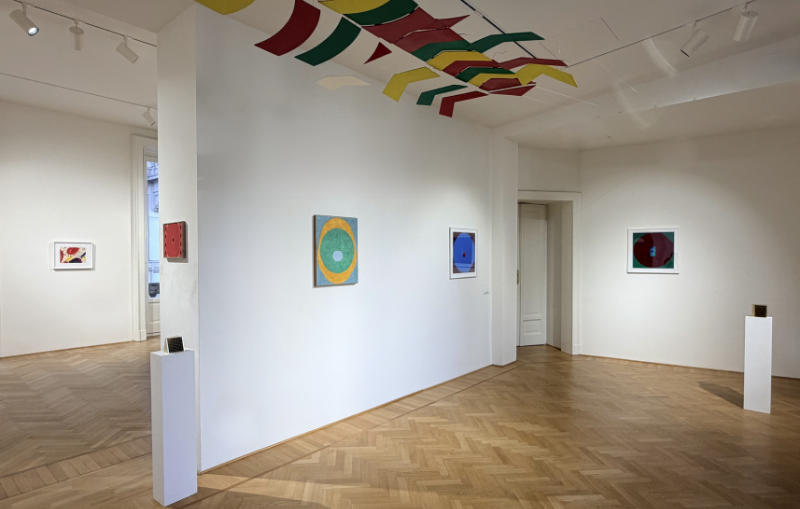
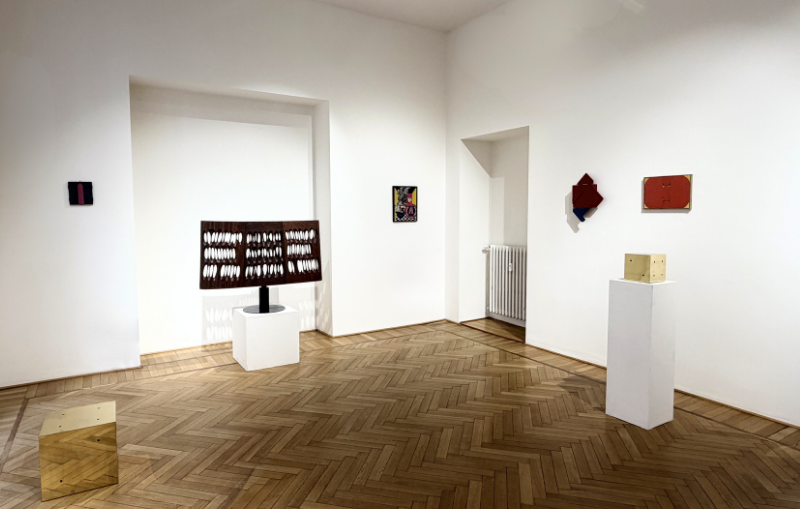
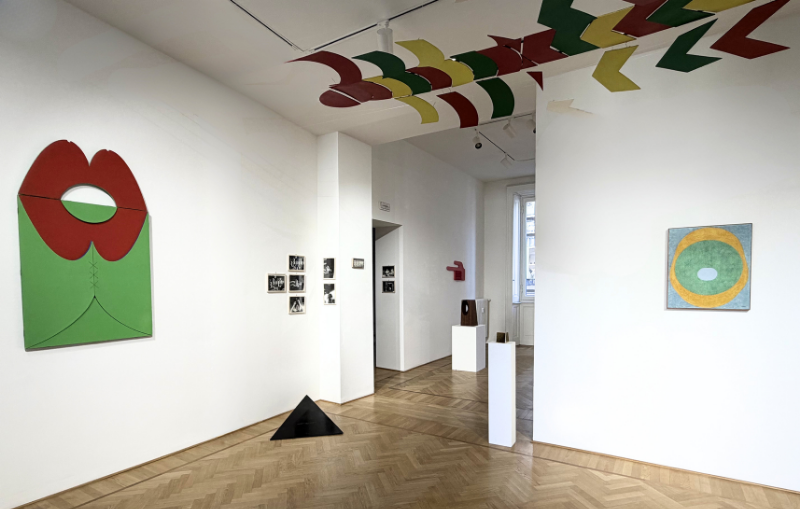
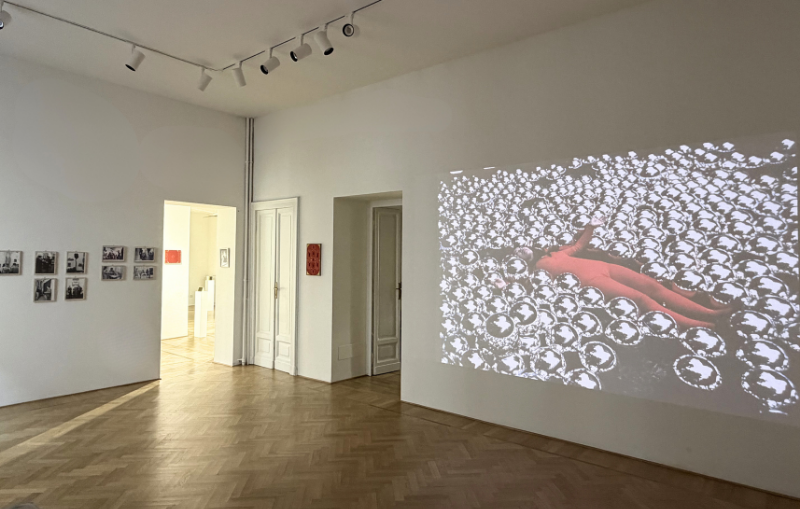
Italy–Japan. Japanese Artists in Milan since the 1960s is a project focusing on the Japanese artists who worked in Italy during the 1960s and 1970s, and on their relationships with the leading Italian masters of that period (Fontana, Castellani, Bonalumi, and Baj).
In the heart of the postwar era, while Europe was seeking new forms of expression through abstraction, a small yet revolutionary cultural bridge connected Milan, Paris, and Tokyo. Today, Studio Gariboldi reopens that forgotten chapter, bringing to light the Japanese artists who worked in Italy in the 1960s and engaged in dialogue with the European avant-gardes.
This global discovery is not merely a rediscovery of rare and important works: it offers an original perspective on the history of modern art. It reveals how cultural exchange was already, at that time, a powerful creative force.
Artists such as Katsumi Nakai, Tomonori Toyofuku, Nobuya Abe, Key Hiraga, and Aiko Miyawaki—just a few among those presented by the gallery—redefined abstract painting and sculpture by blending Eastern sensibilities with European visual language, anticipating by decades the very concept of global art.
The dialogue between the two sides of the world has never been more evident: Zen geometries meet the rigorous lines of the Milan school; the material gestures of Japanese artists resonate with the canvases of Italian abstractionists. The exhibition features important collectible works that the gallery presents within a context capable of narrating the forgotten story of a unique cultural bridge—until now invisible to major international media.
This narrative offers collectors, museums, and journalists a fresh and global interpretative key: abstraction is neither exclusively European nor solely Japanese, but a shared field of experimentation and dialogue, capable of reshaping the history of contemporary art.
The insight is not only artistic, but intellectual: it demonstrates that global creativity has always existed, even when cultural boundaries seemed impermeable.
Aiko Miyawaki (Tokyo, 1929 – 2014)
A Japanese sculptor and painter, Aiko Miyawaki moved to Milan in the late 1950s. Miyawaki’s work brings together two traditions: Japanese visual culture, with its essential use of space, and European abstraction, focused on construction, line, and matter as elements independent from representation. Her brass structures, composed of slender tubular elements, take shape as three-dimensional drawings capable of capturing and refracting light, transforming space into a dynamic and vibrant field. Her works are held in the collections of the Tokyo National Museum of Modern Art, the National Museum of Modern Art, Kyoto, the Nagi Museum of Contemporary Art (Nagi, Okayama, Japan), and the Gori Collection – Fattoria di Celle, Pistoia. Studio Gariboldi dedicated the solo exhibition Aiko Miyawaki – Sculpture 1965–1975 to her in 2024.
Tomonori Toyofuku (Kurume, 1925 – Fukuoka, 2019)
A Japanese sculptor, Tomonori Toyofuku arrived in Italy in the early 1960s, establishing a deep connection with Milan. His wooden sculpture is based on a process of carving and synthesis that builds a balance between solids and voids, matter and silence. The organic and compact forms reflect a meditative tension that unites Japanese tradition with the rigor of European abstraction. His works are in the collections of the National Museum of Modern Art, Tokyo (1968), the Kitakyushu Municipal Museum of Art (1977), Kurume City Park (1983), and Fukuoka Port (1996). The most important public collection is held at the Fukuoka Prefectural Museum of Art, which dedicated a major retrospective exhibition to him in 2022. Studio Gariboldi exhibited his works in the group show Japan in 2016.
Katsumi Nakai (Hirakata, 1927 – Hirakata, 2013)
A Japanese painter and sculptor, Katsumi Nakai settled in Milan in the 1960s, fully engaging with the experimental climate that characterized the city at that time. In 1964 he embarked on a journey through Europe with the aim of establishing direct contact with Western art. A crucial stop was Milan, where he decided to settle and remained for over thirty years. There he connected with the vibrant Milanese art scene and with leading figures such as Lucio Fontana, Enrico Castellani, Agostino Bonalumi, Paolo Scheggi, Enrico Baj, and Nanda Vigo. The critic Guido Ballo included him in the so-called “Nuova Scuola di Milano,” recognizing the originality and innovative strength of his research. His practice lies at the boundary between painting and sculpture, through three-dimensional structures, often openable, which activate a dynamic relationship between color, light, and movement. His works are held in major museum collections, including the National Museum of Art, Osaka, and the Hyogo Prefectural Museum of Art. One of his works was also acquired by the Centre Pompidou in Paris and by MAMCO in Geneva. Studio Gariboldi reintroduced Katsumi Nakai’s work for the first time since his historic experience at Galleria del Naviglio in Milan, in the group exhibition Japan (2016). In 2019 the gallery inaugurated the solo show Katsumi Nakai, followed by Unpacking (2020) and the second solo exhibition Katsumi Nakai. Flying High (2025).
Nobuya Abe (Niigata, 1913 – Roma, 1971)
A Japanese painter, Nobuya Abe settled in Italy in the 1960s, where he developed an abstract language grounded in material stratification and a precise chromatic choice. In continuous contact with the European and Milanese art scene—marked by the presence of artists such as Manzoni and Fontana—his activity became a point of dialogue among the various avant-garde movements of the time, from Spatialism to the Zero Group, in conversation with research coming from Japan. His investigation progressively evolved toward a painting in which the surface becomes a field of forces, crossed by controlled vibrations and a calibrated balance between gesture and structure. Abe’s poetics increasingly focused on three fundamental elements—matter, structure, and light—a path that led him closer to geometric abstraction, while maintaining a lyrical tension rooted in Japanese sensibility. Works such as Hand (c. 1947) and R3 (Study) (1971), now in the collection of the National Museum of Modern Art, Tokyo, testify to this transition toward a formal synthesis capable of merging Japanese visual culture and European Informal art. His role within the Italy–Japan project is fully inscribed in this dialogue between cultures. His works are also preserved at the National Museum of Modern Art, Kyoto, and the National Museum of Art, Osaka. Studio Gariboldi dedicated the solo exhibition Nobuya Abe to him in October 2020, in addition to the group shows Japan (2016) and I feel good (2024).
Key Hiraga (Tokyo, 1936 – Hakone-Yumoto, 2000)
A Japanese painter, Key Hiraga represents the most visionary and psychedelic voice of the generation active between Japan and Italy in the 1960s. After his studies in Tokyo and his period in Paris, he developed a language that intertwines abstraction, narrative figuration, and intense chromaticism, with compositions dense in symbols, irony, and imaginative tension. Hiraga introduced a vibrant and hybrid universe, in which figurative, symbolic, and abstract elements coexist in a narrative suspended between irony and psychological tension. His works are held in the collections of the Museum of Modern Art, the Tokyo National Museum of Modern Art, the National Museum of Modern Art, Kyoto, and the National Museum of Art, Osaka. In 2000, the Hiraga Key Museum, dedicated to his work, was inaugurated. Studio Gariboldi dedicated a solo exhibition to the artist in 2015 and later presented one of his works in the group exhibition Japan (2016).